
STM32F103C8T6 ARM STM32 Minimum System Development Board microcontroller core board module for ARM Cortex-M3 CPU development with SWD debug, Mini USB interface, 5.3cm x 2.2cm size and 2.0-3.6V power I/O operation


STM32F103C8T6 ARM STM32 Minimum System Development Board microcontroller core board module for ARM Cortex-M3 CPU development with SWD debug, Mini USB interface, 5.3cm x 2.2cm size and 2.0-3.6V power I/O operation
STM32F103C8T6 ARM Cortex-M3 Minimum System Development Board with Mini USB Interface
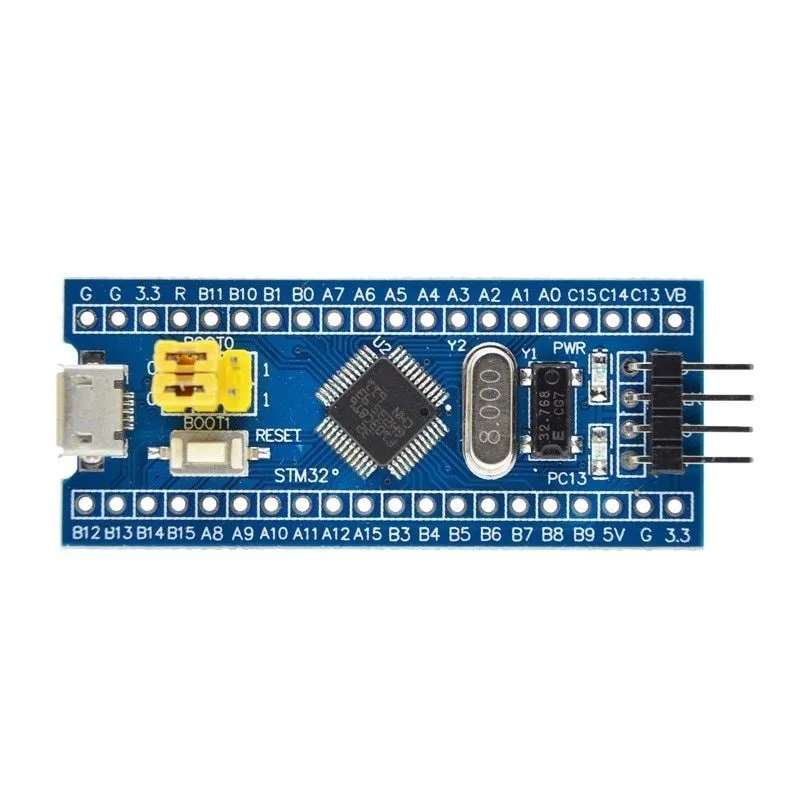
This STM32F103C8T6 ARM STM32 minimum system development board module delivers a complete ARM Cortex-M3 microcontroller platform in a compact 5.3cm by 2.2cm form factor. Designed for embedded system developers, students, and electronics hobbyists, this core board provides immediate access to the STM32F103C8T6 microcontroller's capabilities without requiring extensive peripheral circuitry design. The integrated Mini USB interface serves dual functions, supplying operational power while enabling USB serial communication for data transfer and debugging purposes. With its SWD debug mode implementation, developers gain direct programming access to the microcontroller's 64K flash memory and 20K SRAM resources. Operating across a 2.0-3.6V power range, this development board accommodates various voltage requirements commonly encountered in embedded applications and prototyping scenarios.
Features and Construction
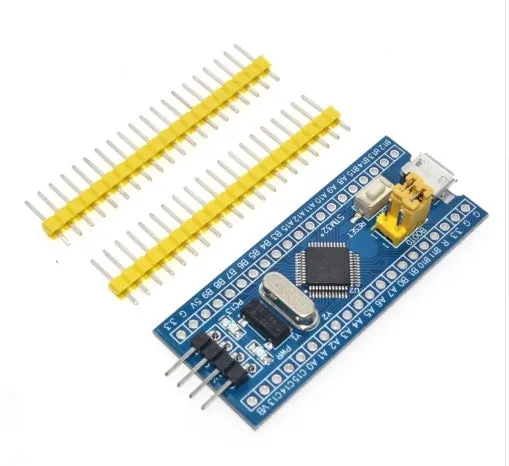
The STM32F103C8T6 development board combines essential microcontroller support circuitry with practical development interfaces in a minimal footprint design. This configuration reduces the peripheral component count required for initial project setup while maintaining full access to the ARM Cortex-M3 CPU's processing capabilities. The board's construction prioritises functional completeness within its compact dimensions, incorporating necessary clock generation, power regulation, and communication pathways alongside the primary microcontroller component.
Material and Build
At the centre of this development board lies the STM32F103C8T6 microcontroller chip, which houses the ARM 32-bit Cortex-M3 CPU core operating at 72MHz. The PCB substrate measures 5.3cm by 2.2cm, providing sufficient real estate for the microcontroller, crystal oscillator, voltage regulation components, and connection interfaces while maintaining manageable proportions for integration into prototype enclosures. The Mini USB connector offers both power delivery and serial communication capabilities through a single compact interface, reducing external connection requirements. Component placement and routing considerations ensure stable operation across the specified 2.0-3.6V power input range while maintaining signal integrity for the SWD debug interface.
Size and Practical Fit
With dimensions of 5.3cm by 2.2cm, this development board occupies minimal workspace while providing complete microcontroller functionality. This compact size facilitates integration into existing projects, prototype enclosures, and educational demonstration setups where space considerations matter. The board's rectangular proportions and standard mounting hole placements allow for secure attachment within various project configurations. Despite its minimal footprint, the development board maintains accessible test points and connection headers for peripheral expansion, enabling developers to extend functionality through additional modules or custom circuitry as project requirements evolve.
Uses and Placement
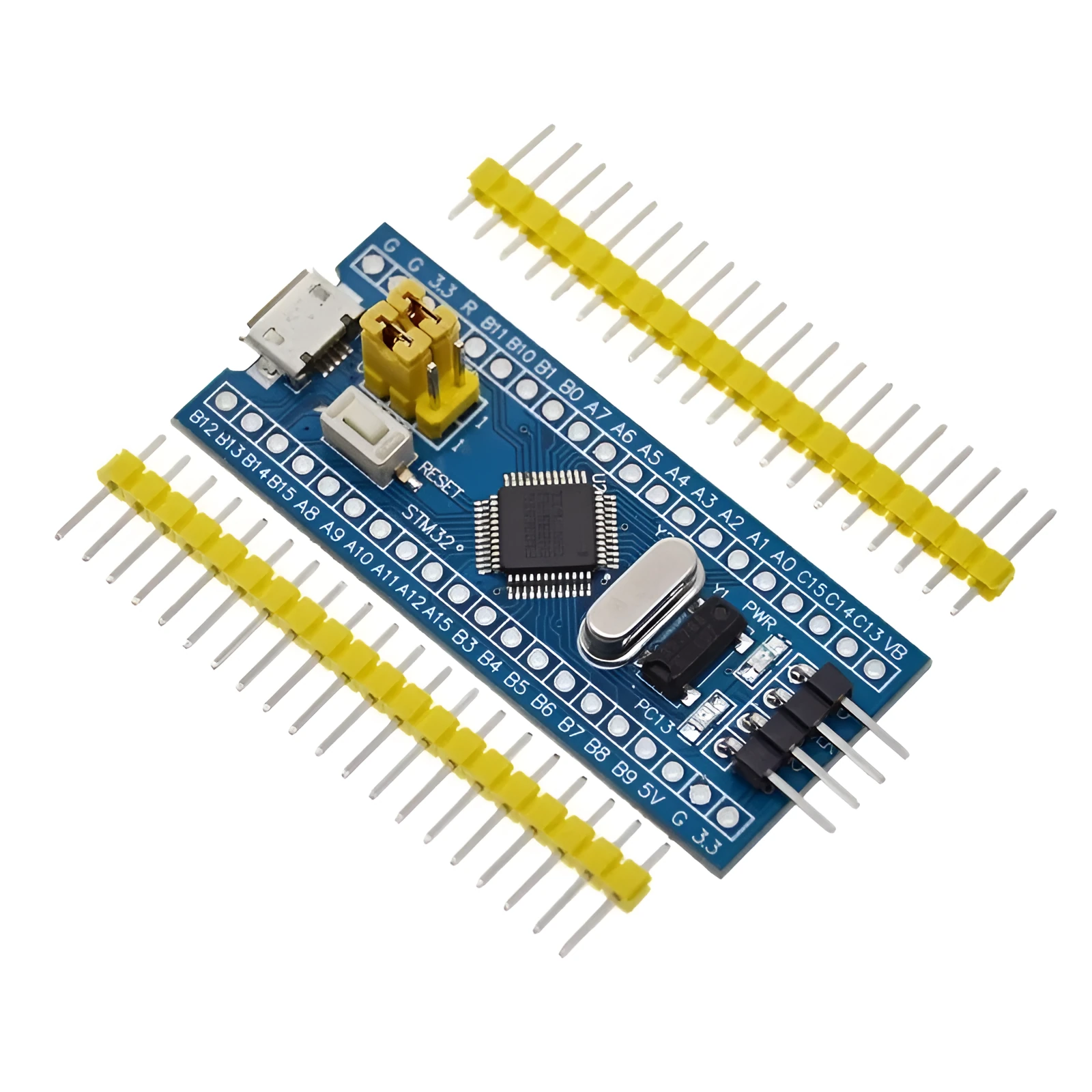
This STM32 development board serves multiple application domains, from educational demonstrations to professional prototyping work. Its combination of processing power, memory resources, and connectivity options supports diverse embedded system development requirements across industrial, consumer, and academic environments. The board's standard interfaces and well-documented architecture lower the learning curve for those new to ARM microcontroller development while providing sufficient capabilities for experienced developers working on proof-of-concept implementations.
Event or Professional Use
In professional development environments, this STM32F103C8T6 board accelerates prototyping cycles by providing immediate access to ARM Cortex-M3 processing capabilities. The 72MHz operating frequency and 64K flash memory accommodate moderate complexity control algorithms, data processing routines, and interface management tasks common in embedded applications. The SWD debug mode supports efficient firmware development workflows, allowing real-time monitoring and modification of program execution. Industrial prototype development benefits from the board's 2.0-3.6V operational voltage compatibility, which aligns with various sensor interfaces and peripheral voltage requirements encountered in automation, monitoring, and control system projects.
Everyday Home Use
For electronics enthusiasts and home laboratory setups, this development board offers an accessible entry point to ARM microcontroller programming and embedded system design. The Mini USB interface simplifies connection to standard computers for both power and programming, eliminating the need for specialised power supplies or programming hardware. Hobbyist projects involving home automation, robotics, data logging, or custom controller creation can leverage the board's processing capabilities and memory resources. Educational users benefit from the direct relationship between the development board and widely documented STM32 microcontroller architecture, with extensive community resources and example code available for learning purposes.
Benefits and Buying Value
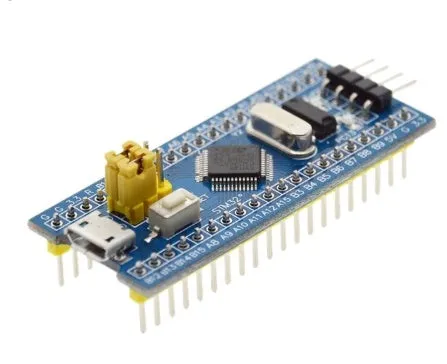
This STM32 development board provides practical value through its functional completeness, eliminating the need for separate power regulation, clock generation, and programming interface circuitry. The integrated design reduces component procurement and assembly time for those beginning ARM microcontroller projects, while the standard form factor ensures compatibility with common development accessories and enclosure options. The board's construction focuses on providing reliable operation across its specified parameters without unnecessary complexity that might increase cost or introduce potential failure points.
Reuse and Low Maintenance
The development board's durable PCB construction and standard component selection support multiple project cycles and extended use periods. The STM32F103C8T6 microcontroller's flash memory can be reprogrammed numerous times, allowing the same hardware platform to serve different applications as development interests evolve. Minimal maintenance requirements stem from the board's solid-state design, which lacks moving parts or components requiring regular adjustment. The Mini USB interface's standard connector design ensures long-term compatibility with commonly available cables, while the board's voltage regulation circuitry protects the microcontroller from potential power supply variations within the specified operational range.
Why Choose This Product
This STM32F103C8T6 development board distinguishes itself through its balance of capabilities and practical implementation. The combination of ARM Cortex-M3 processing, substantial memory resources, and integrated USB connectivity in a compact form factor addresses common development requirements without unnecessary complexity. The board's SWD debug mode provides professional-grade programming and debugging access typically found in more expensive development kits. For those seeking immediate start with ARM microcontroller projects, this board eliminates the peripheral design phase while maintaining flexibility for expansion through standard header connections and accessible I/O pins.