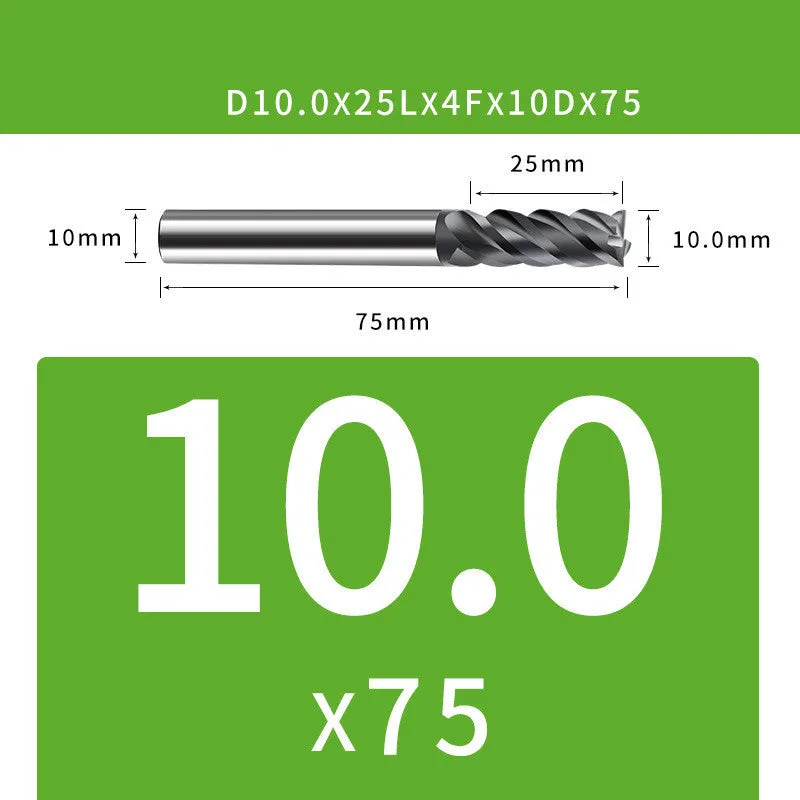
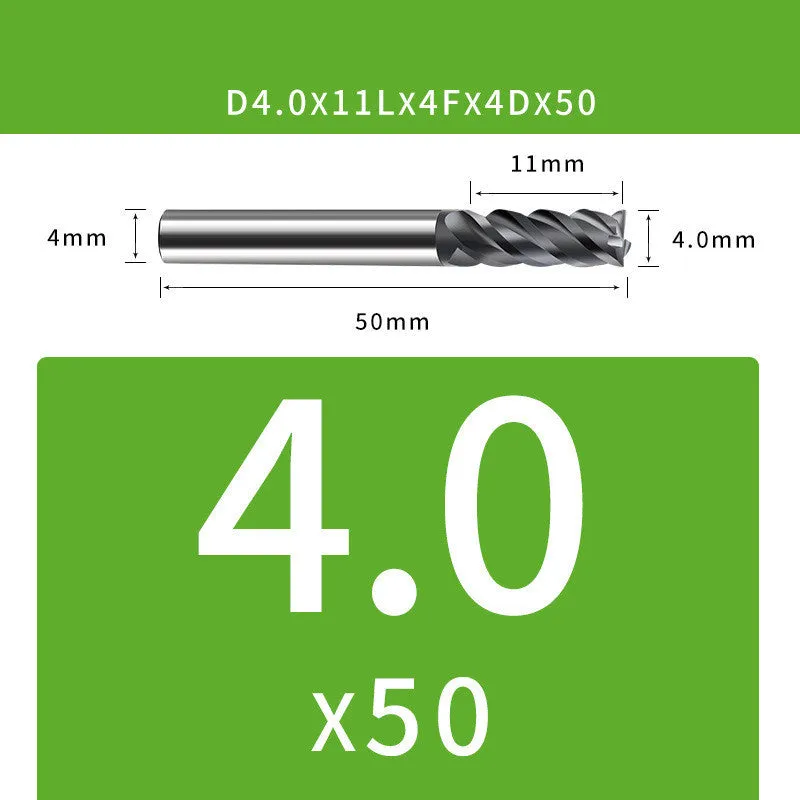
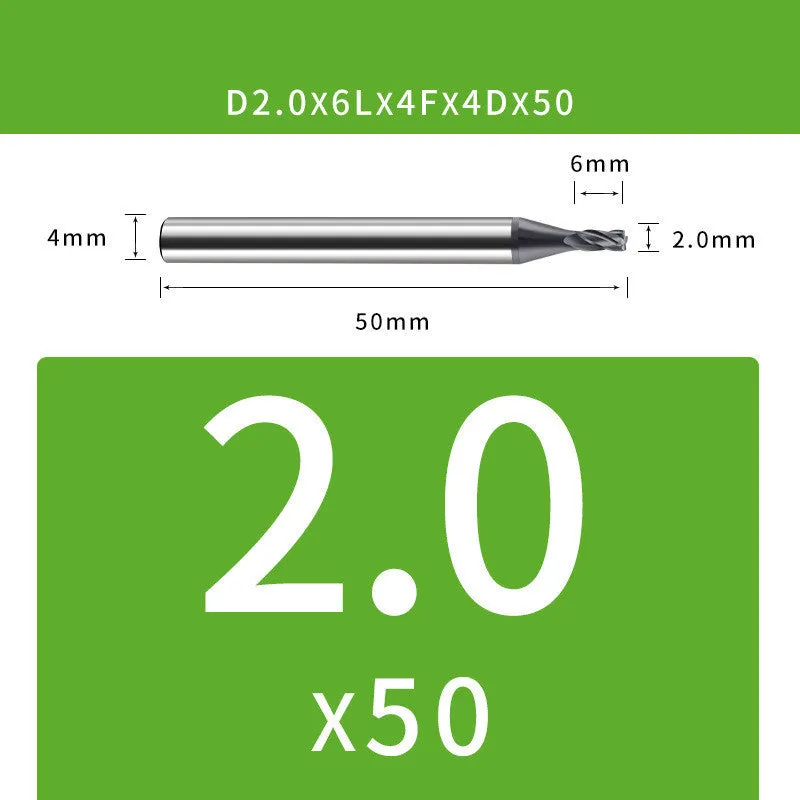
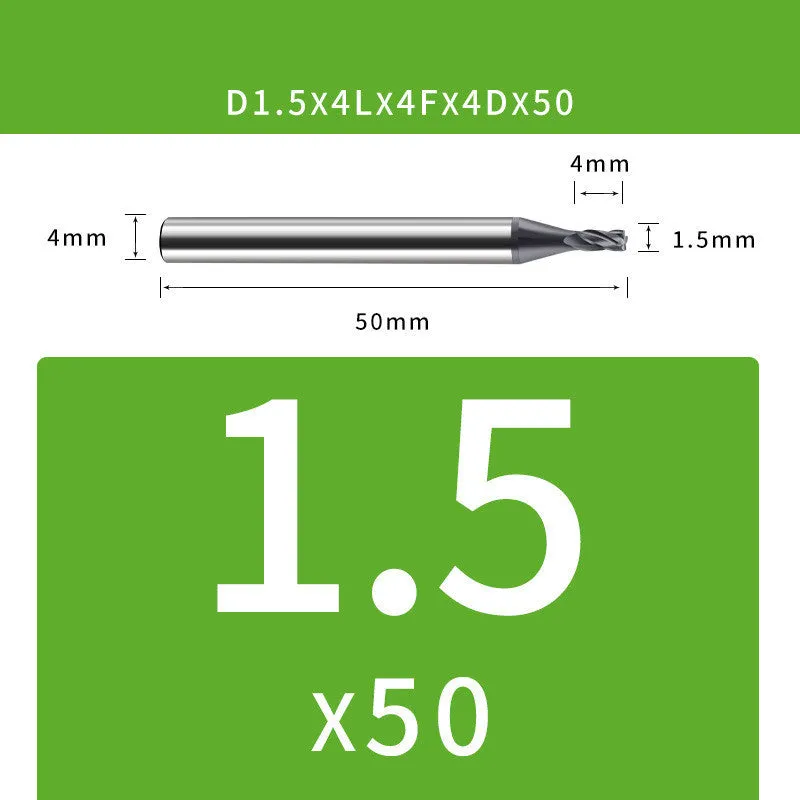
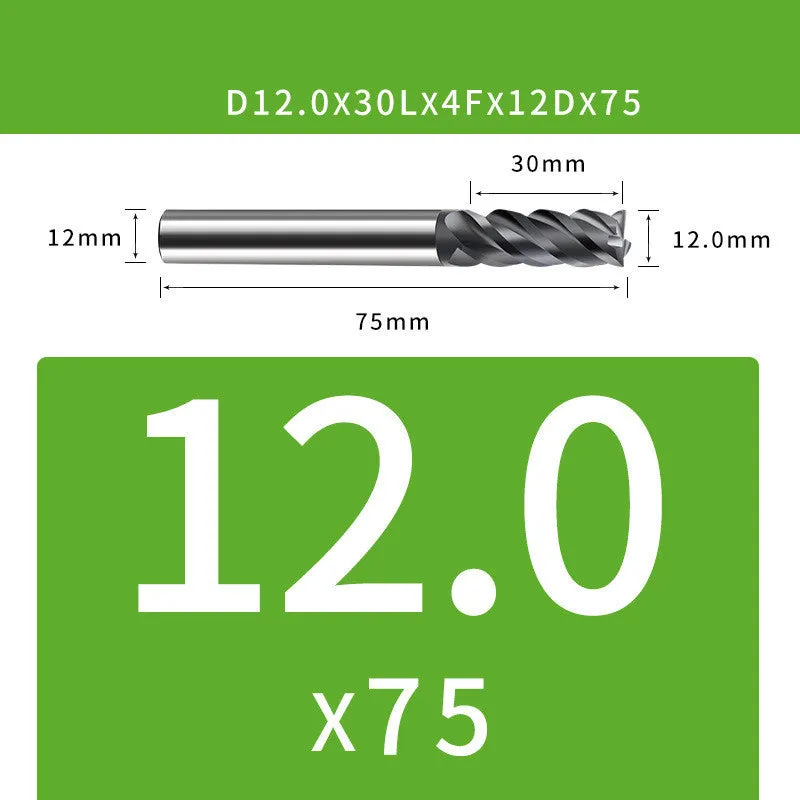
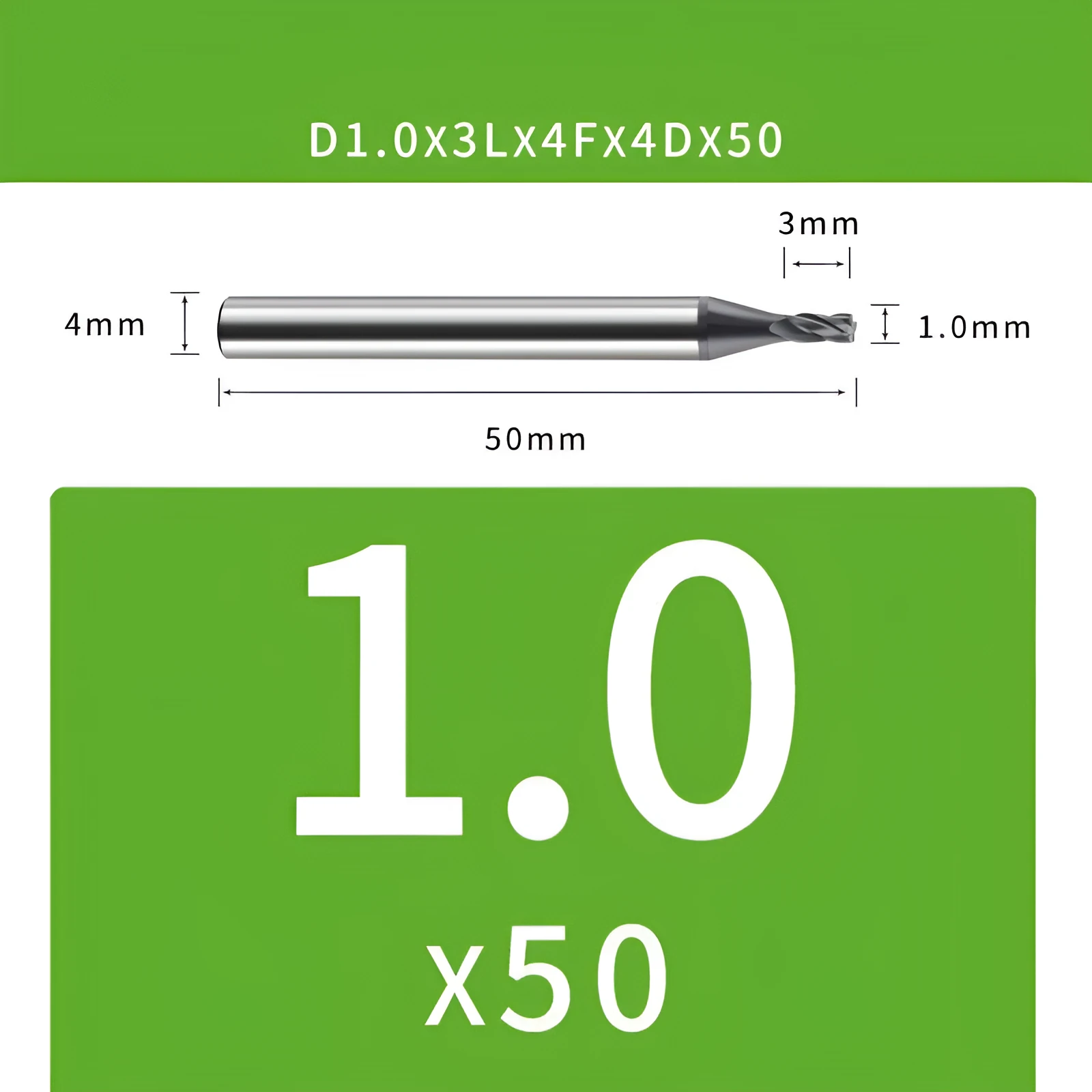
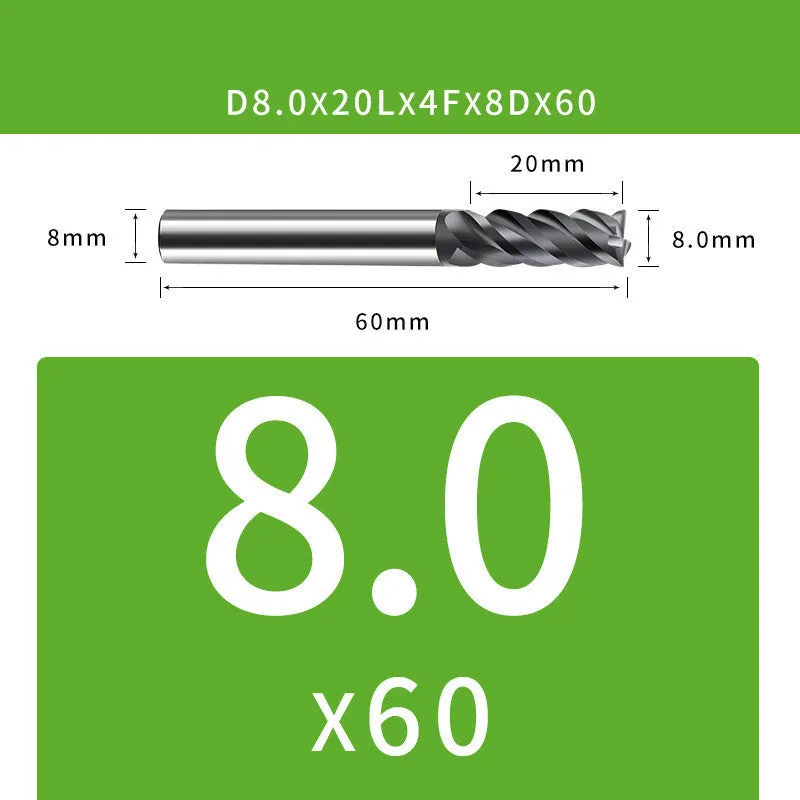
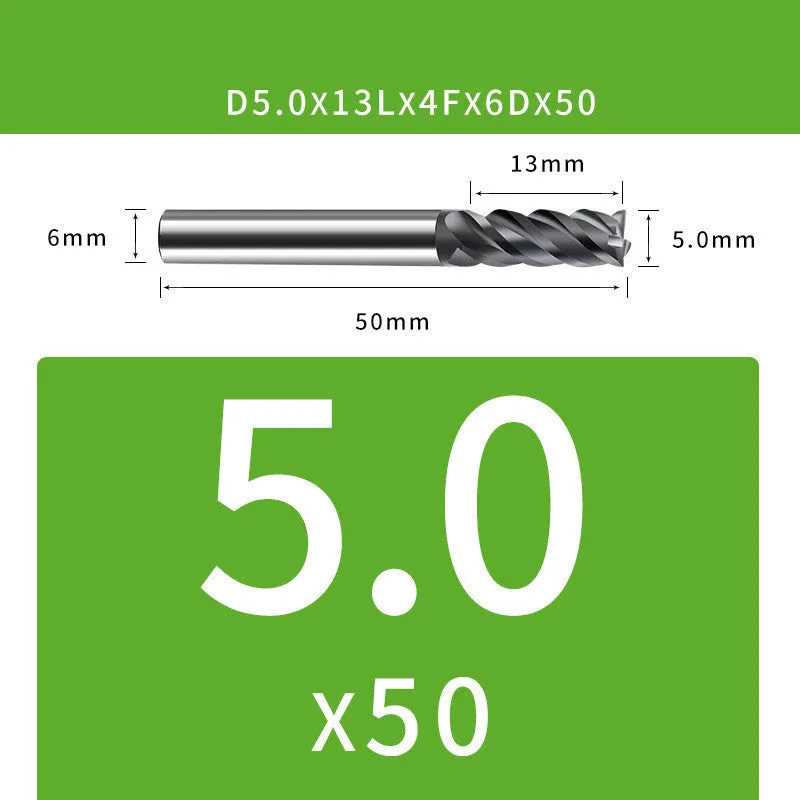
4-blade end mill in tungsten steel with 35° helix angle for milling 1-12mm cutting diameter and up to 50mm depth, available in multiple shank and cutting length combinations including D1.0, D1.5, D2.0, D3, D4, D5, D6, D8, D10, and D12

4-blade end mill in tungsten steel with 35° helix angle for milling 1-12mm cutting diameter and up to 50mm depth, available in multiple shank and cutting length combinations including D1.0, D1.5, D2.0, D3, D4, D5, D6, D8, D10, and D12
Tungsten Steel 4-Blade Ball End Mill for 1-12mm Cutting Diameters and 50mm Depth
This 4-flute ball end mill is crafted from tungsten steel, designed as a robust cutting tool for milling machines. It is engineered to handle detailed contouring and profiling work, with a practical cutting diameter spectrum from 1 millimetre to 12 millimetres. The tool's specification of a 50mm maximum cutting depth provides versatility for a range of milling depths, while its 35-degree helix angle plays a role in managing chip flow during operation. Available in several precise size configurations, denoted by 'D' codes that correlate cutting diameter with functional length, this end mill offers a solution for specific project requirements where dimensional accuracy is key.
Features and Construction
The design of this end mill centres on its four-flute, four-cutting-edge configuration and its material composition. These elements combine to define its core milling capabilities and application fit.
Material and Build
The tool is manufactured from tungsten steel, a material selected for cutting tools due to its hardness and ability to retain a sharp cutting edge under use. The build includes four effective cutting edges, which work in conjunction with the four flutes to perform the milling action. This multi-edge design can contribute to a consistent cutting finish across the workpiece surface during operation.
Size and Practical Fit
The end mill is offered in a series of specific size combinations to match different milling tasks. The primary specification is its cutting diameter, which ranges from 1mm to 12mm. This is paired with a functional length that varies from 3mm to 36mm depending on the selected 'D' code (e.g., D1.0 has a 3mm length, D12 has a 30mm length). The ball diameter and contour radius both correspond to the 1-12mm range, and the tool incorporates a 90-degree chamfer angle. The maximum permissible cutting depth for all variants is 50mm.
Uses and Placement
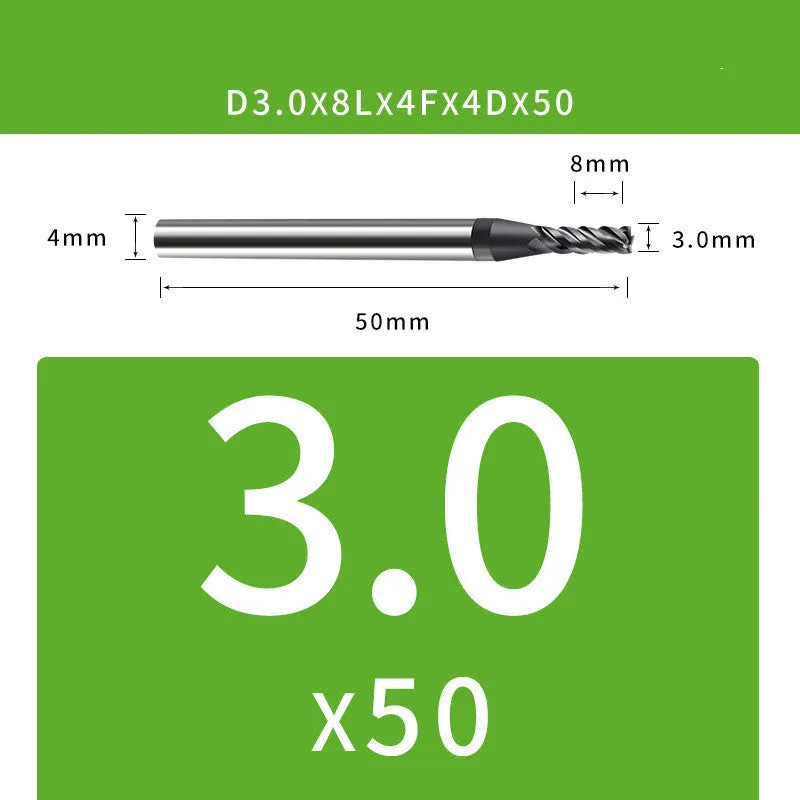
With its defined specifications, this end mill is suited to specific scenarios in workshop and manufacturing environments, from specialised tasks to more general material removal.
Event or Professional Use
In professional machining, tooling with precise dimensional tolerances is essential. This end mill, with its clear 1-12mm diameter grading and 50mm depth capacity, is applicable for creating moulds, dies, or intricate components where curved surfaces and specific radii from 1mm to 12mm are required. The availability of multiple 'D' sizes allows machinists to select a tool with the exact functional length needed to reach into a workpiece without excessive overhang.
Everyday Home Use
For advanced hobbyists or home workshop users with a milling machine, this tool provides a capable option for metalworking or plastics fabrication projects. Its range of smaller diameters (like D1.0, D1.5, D2.0) can be used for detailed engraving, slotting, or creating small radii in custom parts, while the larger diameters (such as D8, D10, D12) are suitable for more substantial contouring work on larger pieces.
Benefits and Buying Value
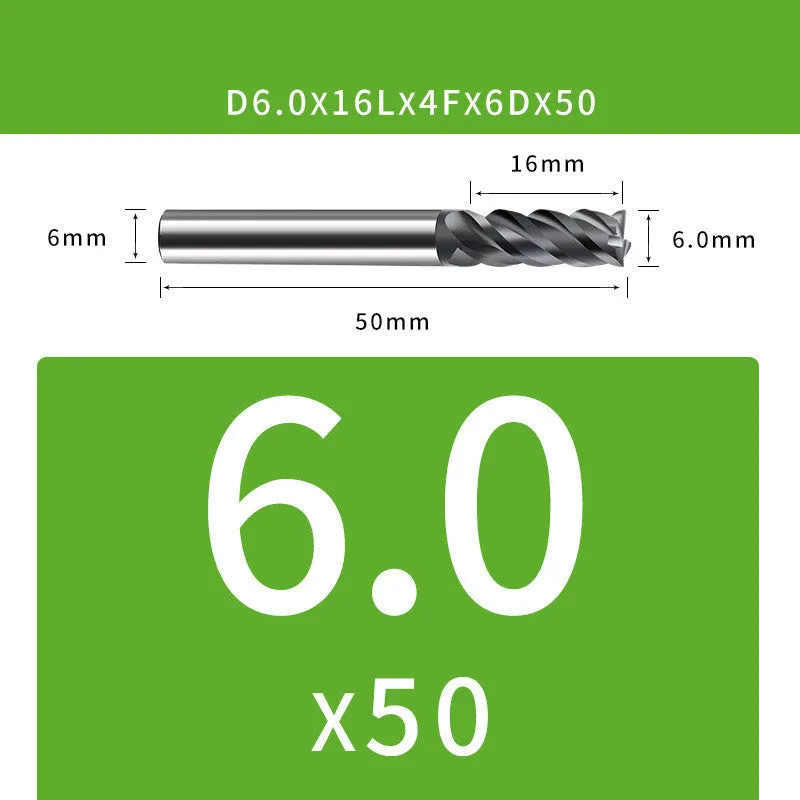
The value of this milling tool lies in its specification-matched design and the practical advantages its construction offers for repetitive or precision tasks.
Reuse and Low Maintenance
The tungsten steel construction is associated with wear resistance in cutting tools, which supports the tool's potential for reuse across multiple projects when used within its stated parameters. Proper selection of the correct 'D' size for the job helps maintain tool integrity and performance over time. Care involves standard tool maintenance practices such as cleaning after use and checking for wear on the cutting edges.
Why Choose This Product
This 4-blade end mill presents a clearly defined tool for milling operations requiring specific ball-end profiles. Its key points of difference are its material (tungsten steel), its four-flute design, and the availability of multiple, clearly listed size combinations. This allows for a targeted purchase based on the exact cutting diameter and functional length needed, rather than a generic one-size-fits-all tool, making it a practical choice for planned milling work.