
Imported carbide alloy micro engraving bits industrial precision tungsten steel milling tools for circuit board electronics SMT die hardware processing communications


Imported carbide alloy micro engraving bits industrial precision tungsten steel milling tools for circuit board electronics SMT die hardware processing communications
Imported Carbide Alloy Micro Engraving Bits for Industrial Electronics and Hardware Processing

These imported tungsten carbide micro engraving bits are engineered for professionals requiring precision tools capable of withstanding the rigours of industrial manufacturing and detailed component work. Constructed from cemented carbide, often referred to as tungsten steel, they offer a combination of high hardness, exceptional wear resistance, and structural strength that resists bending and fracture under pressure. This makes them a practical choice for applications where tool failure can compromise product quality or halt production. Their primary use spans industries focused on precision, including circuit board fabrication, general electronics, SMT (Surface-Mount Technology) assembly, die creation, and various forms of hardware processing and communications equipment manufacturing. With a comprehensive range of diameters available, users can select the exact tool specification to match their specific milling or engraving task.
Features and Construction
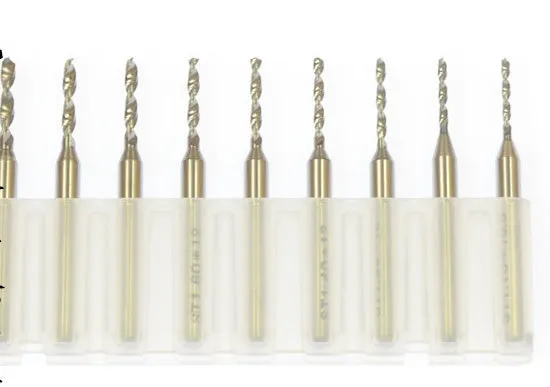
The core value of these bits lies in their material composition and the resulting performance characteristics directly supported by the source text. They are not general-purpose tools but are built for scenarios demanding tool longevity and consistent results on hard or abrasive materials.
Material and Build
The bits are fabricated from imported cemented carbide, commonly known as tungsten steel. This material is selected for its inherent properties of high hardness and high wear resistance, which translate to a longer functional life when used repeatedly on challenging substrates. The source text specifically notes these bits also possess high strength, bending resistance, and fracture resistance, meaning they are less likely to snap or deform under lateral pressure during intricate engraving or milling operations. This construction is fundamental to their suitability for professional and industrial environments where downtime for tool changes needs to be minimised.
Size and Practical Fit
A key differentiator of this product line is its complete specification range. The available diameters run from extremely fine 0.10 mm bits up to 2.00 mm, with multiple incremental sizes in between (e.g., 0.15 mm, 0.20 mm, 0.25 mm). This granularity allows technicians and engineers to match the tool precisely to the required line width, depth, and detail of the engraving. Whether creating microscopic traces on a circuit board or performing detailed work on a metal die, having the correct diameter is crucial for achieving the desired outcome without damaging the workpiece. The option for sets (such as ten sets of 0.10 mm, 0.30 mm, or 1.1 mm) also provides a convenient way to ensure a ready supply of frequently used sizes.
Uses and Placement
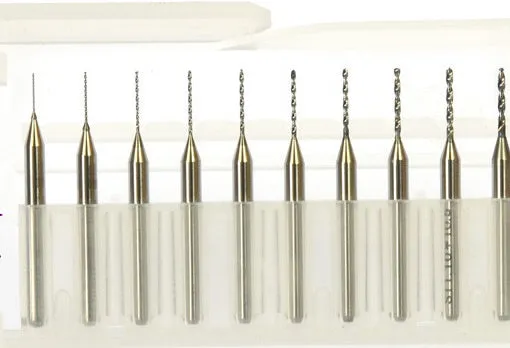
The application scope for these bits is clearly defined by the source material, focusing on industrial and precision manufacturing sectors. Their use is tied directly to the material properties and the size range offered.
Event or Professional Use
In professional settings, these bits are deployed in the machining and fabrication processes central to several industries. They are applicable to circuit board manufacturing for creating conductive pathways and drilling micro-vias. In electronics assembly, particularly SMT, they can be used for modifying or repairing precision components and fixtures. The die industry utilises them for engraving detailed moulds and stamps. Their role in hardware processing involves creating fine details on metal parts, while in communications, they might be used in the production of specialised equipment components. This professional focus underscores the need for reliability and specification accuracy.
Everyday Home Use
These micro engraving bits are not typically intended for casual or everyday home craft use. Their design, material, and specified applications are oriented towards industrial machinery, professional workshops, and technical repair environments. The precision required and the machinery needed to utilise them effectively (such as precision engravers, milling machines, or PCB routers) place them firmly in the domain of skilled tradespeople, technicians, and manufacturing professionals rather than the general consumer market for hobbyist tools.
Benefits and Buying Value
The value proposition for these bits is grounded in their material durability and the practical advantage of a comprehensive size range, leading to efficiency and consistency in professional workflows.
Reuse and Low Maintenance
The high wear resistance of the tungsten carbide material is a primary factor in the product's potential for reuse and lower long-term cost. A bit that wears down slowly maintains its cutting profile and accuracy for longer, reducing the frequency of replacements. The resistance to bending and fracture further supports this, as a tool that does not break under normal operating conditions avoids unexpected stoppages and the cost of a broken bit potentially damaging a workpiece. This durability, coupled with the availability of multiple sizes, means a workshop can maintain consistent results across many projects with a reliable set of tools.
Why Choose This Product
Choosing these imported carbide bits is a decision based on matching tool specifications to a defined professional need. The rationale is practical: if your work involves precision engraving or milling in the electronics, hardware, or communications industries, you require a tool made from a material that can withstand that use. The complete range of diameters ensures you are not forced to compromise by using a slightly too large or too small bit, which can affect the quality of the finished product. The value lies in obtaining a fit-for-purpose tool with clear, source-supported material properties, rather than an unspecified or generic cutting tool that may not perform adequately in these demanding applications.