
WIFI development board based on ESP-8266EX microcontroller with 11 I/O pins and ADC input, Arduino-compatible with OTA wireless upload capability and onboard 5V 1A switching power supply for IoT and electronics projects


WIFI development board based on ESP-8266EX microcontroller with 11 I/O pins and ADC input, Arduino-compatible with OTA wireless upload capability and onboard 5V 1A switching power supply for IoT and electronics projects
ESP-8266EX WIFI Development Board with Arduino Compatibility and OTA Wireless Upload
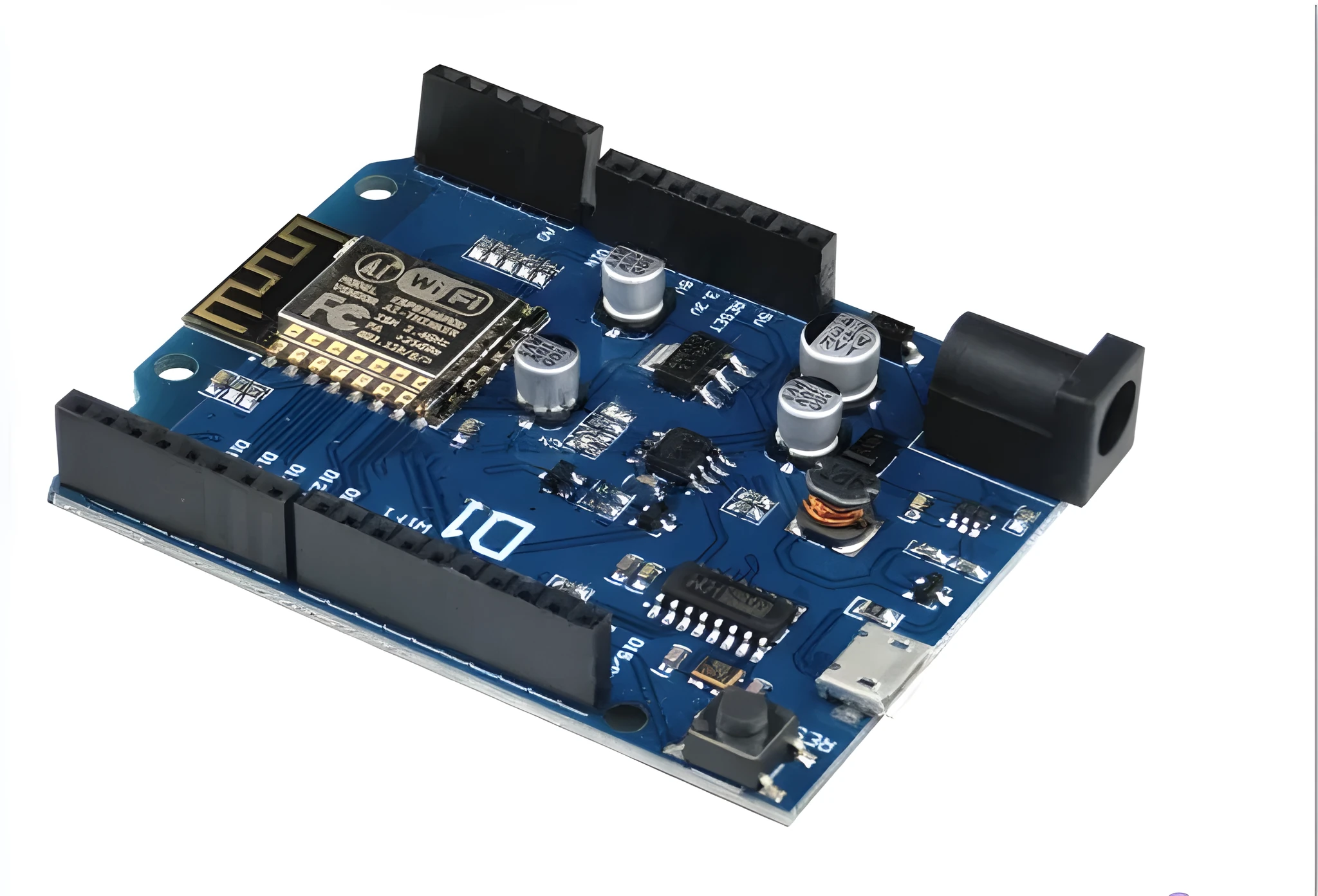
This WIFI development board centres around the ESP-8266EX microcontroller, providing wireless connectivity for Internet of Things applications and electronic prototyping projects. The board offers full Arduino compatibility, allowing developers to program it using the familiar Arduino IDE environment once the necessary hardware package has been installed. This compatibility means those experienced with Arduino UNO boards can transition smoothly to wireless development, following similar operational patterns while gaining WIFI capabilities. The inclusion of OTA (Over-The-Air) wireless upload functionality enables remote code updates without physical connections to the board, streamlining the development process for deployed devices.
Features and Construction

The board incorporates several key features that make it suitable for wireless electronics projects and IoT prototyping work. Its construction centres on providing accessible interfaces while handling power regulation internally to simplify project setups.
Material and Build
The development board is constructed using standard PCB materials with surface-mounted electronic components including the ESP-8266EX microcontroller at its core. The board includes a switching power supply circuit that provides regulated 5V power at up to 1A current output. This onboard power supply accepts input voltages ranging up to a maximum of 24V, eliminating the need for external voltage regulation in many prototyping scenarios. The complete package provides a self-contained development platform requiring minimal additional components to begin wireless project development.
Size and Practical Fit
While exact board dimensions are not specified in the source material, the development board's physical layout accommodates the ESP-8266EX microcontroller alongside supporting circuitry and connection interfaces. The board provides 11 digital input/output pins arranged for convenient access, plus one analogue-to-digital converter pin designed for sensor interfacing. This configuration offers sufficient connectivity for typical IoT applications including environmental sensors, actuator control, and display interfaces. The compact design integrates both the microcontroller and power regulation circuitry in a single unit suitable for prototyping work and embedded deployment.
Uses and Placement
The board serves multiple applications ranging from educational electronics projects to professional IoT device prototyping. Its wireless capabilities combined with familiar development tools make it accessible across different experience levels.
Event or Professional Use
In professional settings, this development board supports rapid prototyping of wireless devices for industrial monitoring, smart home products, or commercial IoT applications. The OTA wireless upload capability allows for remote firmware updates on deployed devices without physical access, reducing maintenance requirements in field installations. The 11 I/O pins provide sufficient interfaces for connecting professional-grade sensors, communication modules, and control relays in automation systems. The ESP-8266EX microcontroller's wireless capabilities enable development of connected devices for data collection, remote control applications, or networked sensor arrays in commercial environments.
Everyday Home Use
For hobbyists and home electronics enthusiasts, the board offers an accessible entry point to wireless project development using the familiar Arduino ecosystem. Home automation projects such as smart lighting controls, environmental monitoring stations, or wireless sensor networks can be developed using this platform. The Arduino compatibility means existing code libraries and community resources for sensor integration and display control can be readily adapted for wireless applications. The onboard power supply simplifies project setup by eliminating the need for separate voltage regulators when powering from common DC adaptors or battery packs.
Benefits and Buying Value
The development board provides practical advantages for wireless electronics development through its integrated design and familiar development environment.
Reuse and Low Maintenance
The Arduino-compatible platform allows code reuse from existing projects and access to a vast library of community-developed examples and drivers. The OTA wireless upload capability reduces maintenance overhead for deployed devices by enabling remote firmware updates without physical disassembly. The onboard power supply's wide input voltage range (up to 24V maximum) provides flexibility in power source selection, accommodating various battery configurations or power adaptors already available to developers. This reduces the need for additional voltage regulation components in final implementations.
Why Choose This Product
This WIFI development board combines the ESP-8266EX microcontroller's wireless capabilities with the accessibility of the Arduino development environment. The inclusion of 11 I/O pins and an ADC input provides sufficient connectivity for most prototyping needs without requiring expansion boards for basic projects. The integrated 5V 1A switching power supply simplifies project design by handling voltage regulation internally. For developers transitioning from Arduino UNO boards to wireless applications, this board offers a familiar workflow pattern while adding WIFI connectivity and OTA update capabilities that streamline both development and deployment processes.