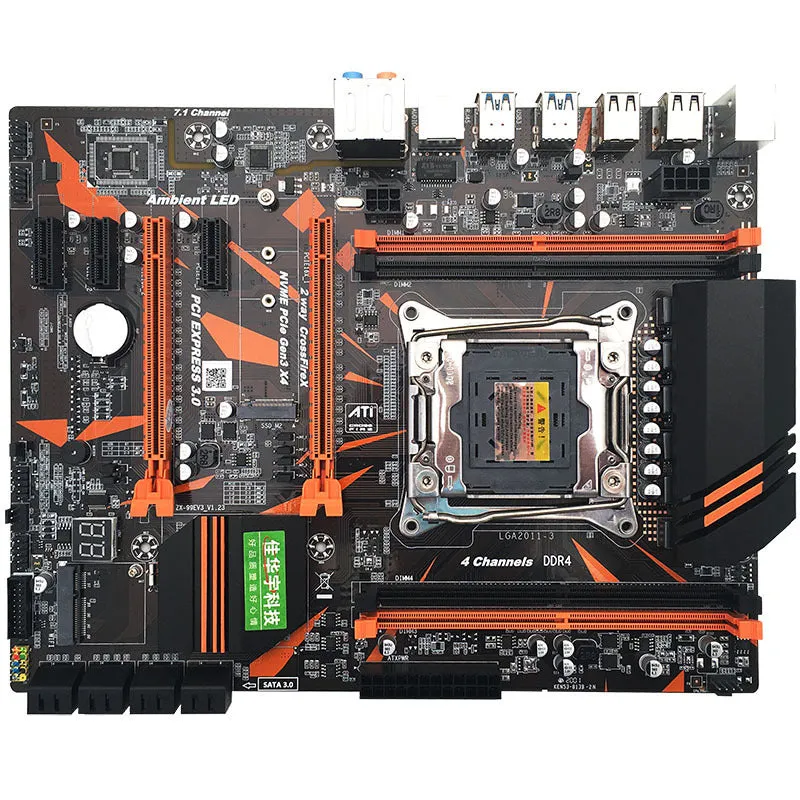
X99 computer motherboard for LGA2011-3 socket CPUs with quad channel DDR4 memory support, four DDR4 DIMM slots, PCIe NVMe M.2 interface, 7.1 channel audio, and RTL8111H Gigabit LAN in black


X99 computer motherboard for LGA2011-3 socket CPUs with quad channel DDR4 memory support, four DDR4 DIMM slots, PCIe NVMe M.2 interface, 7.1 channel audio, and RTL8111H Gigabit LAN in black
X99 Series Motherboard for LGA2011-3 CPUs with Quad Channel DDR4 and M.2 NVMe Support

This X99 chipset motherboard is engineered for Intel's LGA2011-3 socket, creating a platform suitable for high-performance computing, content creation, and multi-threaded workstation applications. It provides a balanced foundation supporting both the Xeon processor family and compatible Core i7 CPUs, paired with advanced memory and storage technologies. The inclusion of quad-channel DDR4 architecture, extensive expansion slots, and modern high-speed interfaces like M.2 NVMe makes it a versatile choice for users building systems that require substantial memory bandwidth and fast data access alongside robust connectivity options.
Processor and Memory Specifications

The board's core compatibility centres on the LGA2011-3 CPU socket, designed for Intel's 2011-v3 platform. This specification details the supported processor ecosystem and the advanced memory configuration that defines its performance potential.
CPU Compatibility and Socket
The motherboard accepts CPUs using the LGA2011-3 interface. This includes processors from the beginning of Intel's Xeon 58 and 6869 series, such as models like the 5820K and 5960X. It also supports compatible Core i7 series processors from the same platform. A specific operational note is that when using a Core i7 CPU, the system cannot simultaneously utilise Registered ECC (RDIMM) memory modules typically associated with server processors; standard unbuffered desktop DDR4 memory must be used instead.
DDR4 Memory Configuration
Memory support is a key feature, with four DDR4 DIMM slots arranged for quad-channel operation. This configuration significantly increases available memory bandwidth compared to dual-channel setups. The slots support DDR4 memory running at 2400MHz or 2333MHz speeds. Each slot can accommodate modules up to 32GB in capacity, allowing for a maximum total system memory of 128GB. This substantial capacity is suited for memory-intensive tasks like video editing, 3D rendering, virtualisation, and scientific computing.
Expansion and Storage Connectivity

Beyond the CPU and memory, the motherboard offers a comprehensive suite of expansion options for adding graphics cards, storage drives, and other peripherals. This section covers the available slots and interfaces for building a fully-featured system.
PCI Express Expansion Slots
For adding graphics cards and other expansion cards, the board provides multiple PCIe slots. There are two primary PCI-E x16 slots, suitable for installing dedicated graphics cards, which can be used for gaming, GPU-accelerated computing, or multi-monitor setups. Additionally, three PCI-E x1 slots are available for smaller expansion cards like sound cards, network adapters, or USB controllers. This layout offers flexibility for users who need to add specific functionality beyond the board's integrated features.
Storage and High-Speed Interfaces
Storage connectivity is comprehensive, featuring eight SATA3.0 (6Gb/s) ports for connecting multiple hard disk drives or SATA SSDs. A significant modern addition is the inclusion of one M.2 slot that supports the PCIe NVMe protocol. This interface allows for the installation of next-generation M.2 solid-state drives that connect directly via the PCIe bus, offering dramatically higher sequential read and write speeds compared to SATA-based SSDs, significantly reducing system and application load times.
Integrated Features and System Management
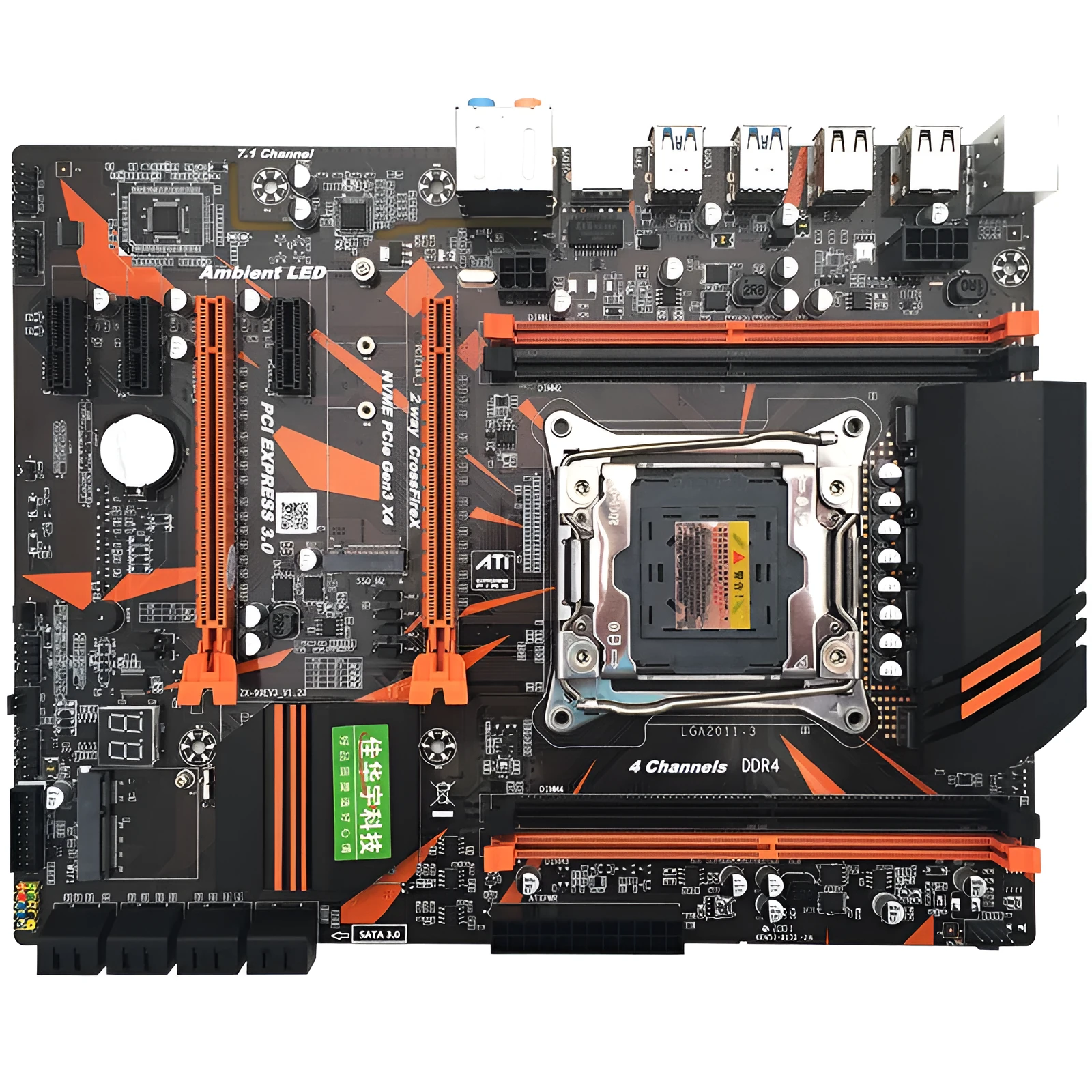
The motherboard integrates several key controllers and includes practical features for system setup and troubleshooting. These built-in elements provide essential connectivity and aid in maintaining system reliability.
Network and Audio Integration
Networking is handled by an integrated Realtek RTL8111H Gigabit LAN controller, providing a stable wired Ethernet connection with support for high-speed data transfer. Audio duties are managed by a dedicated 7.1 channel HD audio codec chip, which outputs surround sound through the rear panel's colour-coded audio jacks. This integrated audio solution is sufficient for gaming, multimedia playback, and general use without requiring a separate sound card for most users.
Power, Diagnostics, and Physical Details
Power delivery to the motherboard requires two connections: a standard 24-pin ATX main power connector and an 8-pin CPU power connector located near the socket. The board implements four distinct power phases for stable voltage regulation to the CPU. For troubleshooting, it includes a digital fault diagnosis display, often a two-digit LED code reader, and a system buzzer for audible beep codes, both invaluable for identifying POST failures. The board also features a WiFi expansion interface and an 8-LED colour audio trace lighting system. The primary colour is black, though the slot baseplate colour may vary between production batches as the product undergoes continuous optimisation.